


On January 11, 1994, General Roméo Dallaire, commander of the UN peacekeeping forces in Rwanda, sent a cable to his superiors in New York. A top-level trainer for the Interahamwe militia had come forward with detailed information. He described plans for mass killings. He identified weapons caches. He warned that extremist militias were preparing for an “anti-Tutsi extermination” campaign. He even predicted that Belgian peacekeepers would be targeted in an attempt to force a UN withdrawal.
Dallaire did what we tell good leaders to do. He gathered the evidence. Assessed the credibility of the source. Reported what he knew. And asked for permission to act -specifically, authority to raid the suspected arms caches.
Permission was denied. Not because the intelligence was judged to be wrong. Not because the analysis was weak. UN officials instructed him instead to consult with government leaders tied to the Interahamwe. There were legal questions, political questions, questions about the mandate and the peace process.
Every desk had a legitimate concern. Every official had a reasonable explanation. Every individual decision made sense when viewed in isolation. Collectively, they produced paralysis.
Within three months, the genocide had begun. Around 800,000 Rwandans, predominantly Tutsis, were murdered over the course of a hundred days.
This was not a failure of intelligence. It was not a Rumsfeldian problem of unknown unknowns. The warnings were specific. The analysis was sound. The outcome was catastrophic. What failed was the accountability architecture - the institutional machinery that was supposed to convert good information into a decision, and a decision into action, and action into a human being who could be named, questioned, and held responsible for the result. That machinery dissolved the moment it was needed most.
I keep coming back to that moment, thirty years later, because it contains something I think we’re missing in the conversation about artificial intelligence.
The Distraction We’ve Been Sold
For most of the past decade, we’ve worried that AI might become clever enough to make decisions. That it might reason, judge, overrule. That it might replace human cognition at the point where it matters most. These are reasonable concerns. But they have been distracting us from a far more dangerous development.
AI isn’t replacing human accountability. It’s giving organisations a more convincing way to avoid it.
I use AI myself. I find it genuinely useful. It can identify patterns I would miss, process information faster than I ever could, and generate analysis that is often sharper than my own first attempt. I’m not arguing against the technology. I’m arguing against a particular way of deploying it - one that adds another layer between a human being and a consequential decision without naming the human who will answer for the outcome.
Consider what happened in Minab, Iran, in March of this year.
An airstrike, (most probably from the US) hit a school in Hormozgan province. The building was struck directly, alongside structures in an adjacent IRGC compound. The school had previously been part of that compound. Amnesty International’s subsequent investigation found that US forces likely relied on outdated intelligence and failed to verify that the target was still a legitimate military objective. One hundred and fifty-six people were killed. One hundred and twenty of them were children.
Amnesty’s report explicitly calls for investigators to examine “how artificial intelligence may have been employed” in the intelligence gathering, targeting decisions, and precautions taken.
I suspect what actually happened was not some elaborate abdication of responsibility. It was simpler and more human than that. Under pressure and time constraints - and probably a lack of fresh intelligence on the ground - someone consulted what information was available and proposed a target. It passed to the next desk. That person assumed the first had verified it. It passed to the next. That person assumed the previous two had. With each layer of approval, the intelligence became more credible - not because anyone checked, but precisely because nobody did. Each person in the chain saw that the recommendation had survived the process so far and assumed the verification had been done somewhere else. By the time it reached the final decision-maker, the targeting package looked authoritative. It had passed through all the right hands. The fact that none of those hands had actually verified the underlying intelligence became invisible - buried under the weight of accumulated approvals.
Nobody set out to kill children. Nobody ducked a hard decision. A chain of reasonable, well-intentioned people each assumed the person before them had done the work, and the assumption compounded until it looked like certainty.
This is the Dallaire problem in its most mundane and devastating form. Not malice. Not cowardice. The quiet alchemy by which an unverified recommendation becomes a credible one simply by surviving the approval chain.
The Immune System for Responsibility
After twenty years in diplomacy, I’ve become convinced that organisations rarely fail because they lack information. They fail because responsibility gradually disappears, and nobody notices until someone asks a question that should have been asked months earlier and discovers that the answer is a polite, well-documented silence.
Somewhere along the way, many institutions have become remarkably good at making that moment disappear. Not through ill intent. Not through obvious negligence. Through the quiet accumulation of process, the layering of committees, the endless circulation of documents that everyone reviews and nobody owns. Organisations have essentially developed an immune system for responsibility - a set of elegant, interlocking mechanisms designed to ensure that when something goes wrong, the inquiry will find that every procedure was correctly followed and nobody was actually in charge.
“The committee decided.”
“Policy requires it.”
“The guidance is clear.”
“The system will not allow it.”
None of these statements is necessarily untrue. But they all perform the same trick. They take a decision made by human beings and wrap it in language that makes the human beings disappear.
AI has not invented this instinct. It’s simply becoming its most sophisticated expression. “The model recommended it” is the newest and most powerful version of a sentence institutions have been perfecting for decades.
Which raises a difficult question.
When an AI-informed decision harms someone, who answers for it?
Not who wrote the code. Not who procured the software. Not who chaired the steering committee. Who owns the decision?
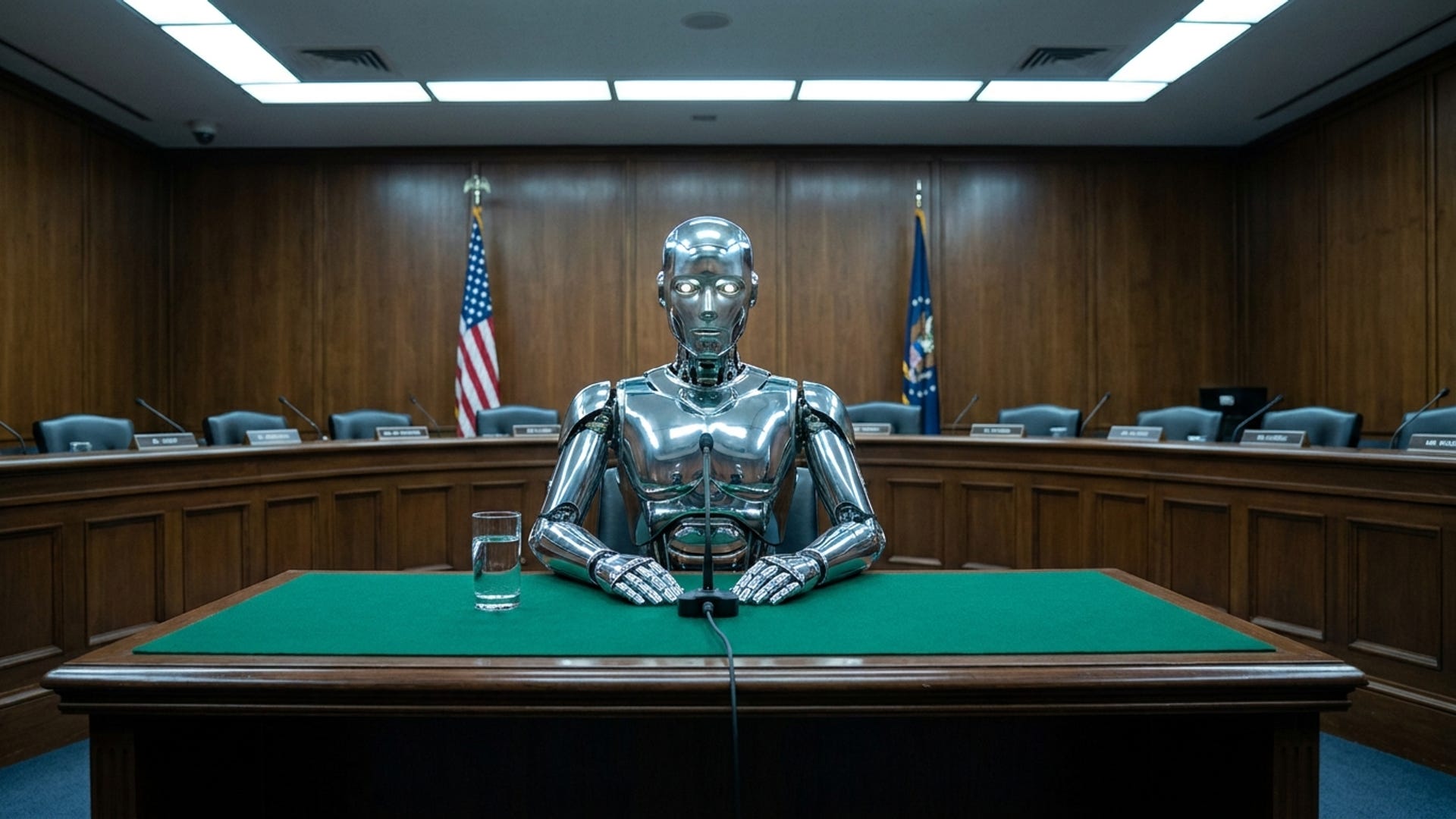
AI can produce recommendations. It can generate analysis that is persuasive, comprehensive, and entirely wrong in ways that take months to discover. It cannot carry moral weight. It cannot stand before a Parliamentary committee. It cannot explain itself to a grieving family. It cannot apologise. It cannot resign.
Responsibility requires an agent - a human being who can be named, questioned, held to account. AI is a tool. The distinction is the difference between a decision-making process and a machine for manufacturing deniability. And right now, we are watching organisations spend millions on the AI while spending approximately nothing on deciding who answers for its mistakes.
But here’s the tension. I’ve spent twenty years watching responsibility disappear, and I’ve also spent twenty years watching what happens when it doesn’t.
The reason responsibility disappears is not just that people are cowardly or evasive. It is that institutions have, over time, turned accountability into a punishment system. When something goes wrong, the first question is too often not “What can we learn?” It is “Who can we blame?” The inquiry is not about understanding. It is about locating a human being who can be offered up so that the institution can say the matter is resolved.
If you design a system where every decision is a potential career-ending mistake, you should not be surprised when people become very good at not being the one who made the decision. The diffusion of responsibility is not a moral failing. It is a rational adaptation to an environment that punishes ownership. People are not hiding from accountability because they are weak. They’re hiding because they have watched what happens to the people who don’t.
Accountability Is Not Scapegoating
So I need to be precise about what I am arguing for. I am not arguing for heads on spikes. I am arguing for clarity.
There is a difference between accountability and scapegoating. Accountability means: we know who decided, what they weighed, and why. It means the decision has an owner. And that ownership serves a purpose beyond blame. When an outcome is known - when you can see that the decision produced harm, or that it produced a result worth replicating - you can trace backwards through the steps that produced it.
If the outcome was bad, you can identify where the reasoning went wrong and adjust the process so the same mistake doesn’t happen again. If the outcome was good, you can understand what worked and reproduce it deliberately. Accountability is not just a mechanism for assigning responsibility after the fact. It is the precondition for learning. Without a named owner, there is no chain of reasoning to examine. There is only an output and a shrug.
Scapegoating is the opposite. It is accountability without safety. It is naming the human not to understand the decision, but to end the conversation. And it produces exactly the behaviour we are now watching AI accelerate: the quiet, reasonable, entirely understandable evasion of ownership. Scapegoating also destroys the learning loop. When the goal is to find someone to blame, the institution learns nothing. It just gets better at the ritual.
The problem with AI is not that it will create scapegoating. Scapegoating is ancient. The problem is that it will offer organisations a third option: neither accountability nor scapegoating, but something more insidious.
It is scapegoating without the scapegoat. It is the most elegant form of institutional cowardice ever devised.
And it makes learning impossible. You cannot trace the steps of a decision nobody made. You cannot improve a process that has no owner.
The Pre-Deployment Accountability Test
So before your organisation deploys AI to make decisions that affect people’s lives - their loans, their liberty, their health, their livelihoods - here are five questions that matter more than model accuracy.
Who owns the decision?
Name the human being. Not the committee. Not the department. The person whose name appears on the cable. If you cannot point to a single individual and say “this decision is theirs,” you do not have a decision-making process. You have a diffusion mechanism.
Who can override the system?
And do they have enough context, expertise, and institutional permission to actually do it? A human veto that nobody is ever willing to exercise is not a safeguard. It is an ornament.
What information would justify disagreeing with the model?
Define the conditions under which human judgment should prevail - before the system goes live. If you wait until the model is confidently wrong and someone is already harmed, you will discover that the override button was never connected to anything.
Who answers if it goes wrong?
Not who wrote the code. Not who procured the software. Not who chaired the steering committee. The human being who will stand in front of the inquiry and say “this decision was mine.” If that person does not exist, the decision does not exist and the harm it produces will belong to everyone and therefore to no one.
Is it safe to say “I made this call and I may have been wrong”?
If the institution punishes ownership, the four questions above are theatre. Accountability without safety is just scapegoating with extra steps. The point is not to have someone ready to be pilloried when things go wrong. The point is that when a human being knows their name is on the decision - genuinely on it, not hidden behind a committee or a model - they think differently. They weigh things more carefully. They ask that second question they might otherwise have skipped. They feel the weight of the choice before it is made, not just the consequences after.
That is the psychological mechanism that matters. It is not about blame. It is about the quality of attention that ownership produces. When you know you will be asked to explain yourself, you take more care. When you know the system will absorb the explanation for you, you take less. This is not a moral argument. It is a design principle.
One of the first lessons diplomacy teaches you is that information does not make decisions. People do.
I have worked with exceptional intelligence analysts over the years. Their job was never to tell ministers what to think. It was to help them decide better. The responsibility always remained with the minister - the person whose name would appear on the cable, who would answer questions in the House, who would carry the consequences if the decision proved wrong. That distinction matters because expertise can inform judgement. It cannot replace it.
AI should be treated in exactly the same way. Its role is to sharpen human judgement, not provide an escape from it.
If we are using AI because it helps us make better decisions, that is progress. If we are using AI because it makes decisions easier to defend, we are heading somewhere more dangerous. Not because the technology is bad. Because the accountability architecture is missing.
Good institutions do two things that are difficult to hold together. They make it hard for responsibility to disappear. And they make it safe for people to hold it. They name the decision-maker and they protect the space around that naming. They ensure that when something goes wrong, there is a human being who can be asked: what did you weigh, and why did you decide as you did? And they ensure that asking that question does not feel like loading a gun.
Bad institutions make it easy for responsibility to disappear and they are about to be handed the most powerful tool for disappearing human agency that has ever existed.
The algorithm cannot resign.
But someone always should be able to.
If you found this useful, the best compliment you could give me is to forward, subscribe, or restack this for your readers. Thank you for taking the time to engage.
Jen you lay it out well. Unfortunately, all the patterns I am seeing within organizations are trending, despite warnings and advice like yours, is headed in a rather problematic direction, driven in no small part by financial and external pressure.