


Everyone in the building was terrified of Jonny Blue Eyes.
When I say everyone, I mean me. And possibly my colleague who also worked in his office. I don’t think we admitted it to each other.
We called him Jonny Blue Eyes - obviously never, ever, ever to his face - because he had piercing blue eyes that seemed able to detect fear. Uncertainty. The slightest suggestion that you hadn’t quite thought something through.
Watching other adults quake when those eyes locked onto theirs was quite entertaining. Until it was your turn.

John was the Political Director, one of the most senior diplomats in the Foreign Office. No major foreign policy proposal could go up to the Foreign Secretary without first being cleared by him. He was across everything. It was very impressive. He was an impressive guy. And he went on to do even more impressive things.
His office was at one end of the corridor of power, on the first floor of the Foreign Office. The Foreign Secretary’s corner suite was at the other.
John’s desk faced the windows overlooking No. 10. On the far wall hung an enormous piece of modern art. Where other senior diplomats might have chosen a reassuring English landscape, John had gone for dark slashes of black and deep blue. Very Rothko in the depths of despair vibes.
Almost everyone commented on it on their first visit. I suspected that was part of the point.
The positioning of his desk meant he had his back to you as you entered and you had to cross oceans of carpet to reach him. There was no accompanying chair. You stood.
When the conversation was over, you had to make your way back across the carpet, negotiate the steps down to the outer office and close the enormous wooden door quietly behind you. Usually in reverse.
Somehow this manoeuvre left you in an obsequious crouch, bowing reflexively while trying not to fall down the stairs.
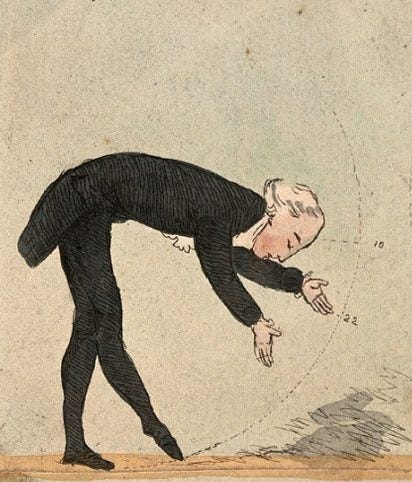
Everything about John signalled power. His position, his office, his furniture - or lack thereof. Even leaving the room felt like an acknowledgement of your place in the hierarchy.
Which, in my case, was near the bottom.
I was his diary secretary and admin support. The people coming through the door were discussing the great geopolitical questions of the day. I was making sure they came through the door at the right time.
I was quite comfortable being invisible. Those eighteen months with John were a cortisol rollercoaster punctuated by adrenaline overload, but they gave me an education in how the place actually worked that I couldn’t have got from a training course.
After a couple of weeks, I started noticing something odd.
Very senior diplomats began saying hello to me in the corridor. I know they were talking to me because, initally perplexed, I’d looked over my shoulder to check.
Then they started stopping to chat. Remembering my name. Asking about my weekend.
This was not the usual experience of someone at my grade. I’d already been in the Foreign Office long enough to be deeply suspicious.
It took me a while to work out what had changed.
I controlled access.
Policy papers came through me. Phone calls were routed through me. If you wanted five minutes with the man whose clearance you needed, you came through me.
And I will confess, with no shame at all, that the people who were courteous got moved up the queue. The people who weren’t, didn’t.
I wasn’t powerful because I had a grand title. I was powerful because I had something people needed.
What power actually looks like
Most of us recognise the obvious signs of power. The job title. The corner office. The seat at the head of the table. The ability to summon a roomful of people who all have better things to do.
And yes, those things matter. John’s authority was very real. I wasn’t secretly running British foreign policy between diary appointments.
But authority doesn’t tell you everything about who can make something happen.
Authority comes with a role: the right to decide, approve, direct or say no. Power is broader. It’s your ability to affect what happens. Some of it comes from your position. Some comes from what you know, who trusts you, the relationships you have or the access you control.
You can see the distinction when someone with an impressive title struggles to get a decision implemented. Or when someone several grades below them sorts it out with a conversation with their mate in Accounts.
Think about the next thing you want to get done at work. Who could help it along? Who could bring it to a grinding halt?
Perhaps it’s your boss. Perhaps it’s the finance officer who knows how to get the budget approved. The assistant who knows the boss’s moods, and when and how to make a request without triggering a monumental tantrum. The colleague whose institutional memory everyone relies on.
You may need several of them. Having the most senior person’s approval doesn’t mean the rest will automatically fall into place.
The other system at work
Every organisation has its official structure. Who reports to whom. Who signs things off. Who gets to chair the meeting.
Alongside it sits a less tidy system of relationships and influence.
Who does the boss consult before making a decision? Who do people go to when they want to know what’s really happening? Who can get two teams talking after months of exchanging increasingly frosty emails?
An organisational chart won’t tell you much about any of that.
You usually learn it by watching. Whose opinion gets sought? Whose objection makes everyone pause? Who gets brought into the conversation even when the subject isn’t technically theirs?
Overseas, I would spend time every week sitting with the Ambassador’s Residence Manager, gossiping and ideally eating cake fresh from the kitchen for some event or other.
I knew that a quiet word from them in favour of one of my public affairs schemes could go a long way towards persuading a reluctant ambassador to agree to it.
These relationships matter both before a decision and afterwards. You can prepare a good proposal, take it to the appropriate person and still struggle to get agreement. Or secure approval, then wonder why nothing happens.
Sometimes the proposal has a problem. Sometimes everyone is simply overwhelmed. And sometimes they’ve missed someone whose cooperation they need, or whose concerns they haven’t understood.
Knowing who signs is useful. Knowing what it will take to get people to act is useful too.
You may have more to work with than you think
If you’re junior, or you’re the only expert in a room full of people who outrank you, it’s easy to assume that influence is something you’ll acquire later. After the promotion. Once you have a team. When somebody finally gives you a proper seat at the table.
But you may already have something that matters to the outcome.
Perhaps you understand the problem better than anyone else. Perhaps people tell you things they won’t tell their manager. Perhaps you know how to make a process work, or you’ve built a relationship with someone the rest of the team struggles to reach.
None of that guarantees you’ll be listened to. It does give you somewhere to start.
In John’s office, my access came with the job. What I did with it was another question. There’s a difference between being the person everyone has to go through and being the person they trust to help.
I learned to read John’s moods and preferences. When to make a request. What he respected. What wound him up. Then I used that knowledge to help the departments coming to him give him what he needed - even when he hadn’t necessarily articulated what that was.
And if you’re senior, this matters just as much. Your authority gives you options, but it doesn’t remove your dependence on other people. You still need to understand what they know, what they’re worried about and whose judgement they trust.
You’ll learn rather more by asking them than by assuming the answer is you.
Before your next meeting
Pick something specific you want to achieve. Getting a proposal approved. Securing a resource. Persuading another team to help.
Then ask:
Who formally decides? Who can approve this particular thing?
Who influences that decision? Whose advice does that person seek or take seriously?
Who do I need to make it happen? Who controls the access, information, resources or practical work involved?
You don’t need a dossier on everyone in the building. Start by checking whether you’ve mistaken the most senior person for the only person who matters.
Then ask one more question: what do I bring that could help?
Expertise? A useful relationship? An understanding of why the last attempt failed? The trust of the people who’ll have to do the work?
That’s something you can use. You don’t have to wait for a different job title to begin.
Nice distinction between authority and power.
Out of topic, but I would like to know, how do you usually spend your downtime? How to keep in touch with actual friends?