


Ask a diplomat to codify negotiation into a neat set of tangible skills and they’ll usually give you a slightly odd look. Not hostile exactly. More the carefully neutral expression we adopt when we’re either mildly perplexed, quietly alarmed, or rapidly recalculating our position in real time.
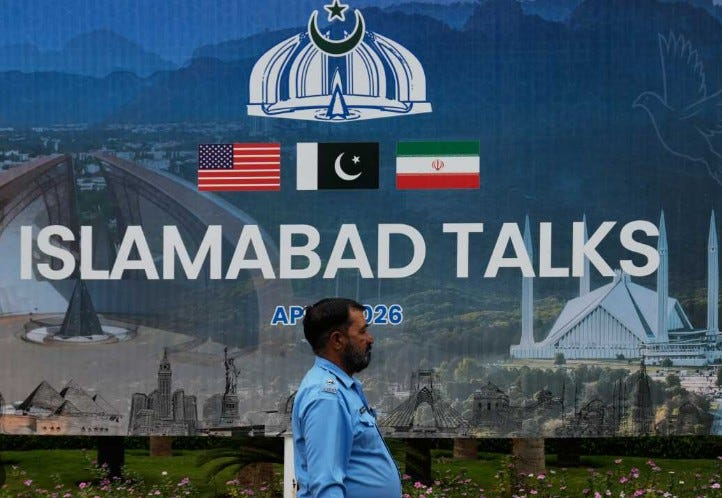
I’ve been thinking about this a lot recently. Partly because I’m increasingly asked to teach negotiation. But mostly because I’ve spent the last month watching that international negotiation fall apart, with a mixture of fascination and low-level frustration.
It looks exactly like what people imagine negotiations to be. High stakes meetings. Public positioning. Tough rhetoric. Carefully staged optics. A lot of visible movement and an almost theatrical sense of importance.
The world hanging on its every deliberation.
And yet somehow, nothing appears to be moving underneath it all.
Which has made me wonder whether the problem isn’t necessarily how negotiations are being conducted, but how we think about negotiation in the first place.
And after twenty years in diplomacy, I’ve come to a slightly awkward conclusion.
I’m not entirely convinced negotiation is a “skill” in the way people often mean it. Or at least not a standalone one. It feels closer to theatre. Not in the superficial sense we tend to associate with modern politics - the performative outrage and public chest-beating - but something much more deliberate and sophisticated than that.
A kind of strategic choreography.
The visible moment - the meeting, the handshake, the formal exchange of documents - is usually only a tiny fragment of what’s actually happening. Most of the real work has already taken place long before anyone enters the room. The relationships. The signalling. The testing of boundaries. The understanding of pressures and personalities and risks. The gradual shaping of conditions that might make agreement possible.
And underpinning all of that are qualities we rarely associate with “winning” negotiations at all: restraint, discretion, humility, emotional regulation, contextual awareness.
In other words, strategic empathy.
In my experience, the people who consistently move difficult negotiations forward are rarely the ones delivering the cleverest arguments, nor do they hold “all the cards”. Occasionally, as we’re seeing now they’re not even the most powerful, in the traditional sense.
More often, they are the people who understand the reality on the other side of the table most completely.
Not just the official position. The human one.
Years ago whilst I was overseas, the UK was hosting a major international conference on a politically sensitive issue, but one on which the global community was aligned. Significant visibility. Senior attendees. Considerable effort invested. Everyone important invited.
Except our host country still hadn’t agreed to come. And London really, really wanted them to.
More senior embassy colleagues than me had spent weeks trying to persuade the relevant minister. They had the position papers, the carefully calibrated language, the policy rationale, the diplomatic pressure. All the right arguments had been made in all the right ways.
Nothing worked.
Eventually London sent the ambassador and I went along largely as the bag carrier notetaker.
The meeting itself was perfectly civil. Polite. Professional. Completely stuck.
The minister wasn’t hostile. In fact, that was partly the problem. Open disagreement is often easier to work with than polite immovability. At least hostility gives you something tangible to engage with.
This was going nowhere, courteously.
Eventually the ambassador ran out of road and the awkward silence began.
And then, slightly to my own surprise, I heard myself ask:
“What would it take for you to say yes?”
The ambassador looked at me outraged at my impertinence. I was going to pay for this breach of protocol later.
The minister, however, looked relieved.
And then she told us.
Not her position. We already knew the position. And that was what was so confusing about their refusal to attend - they had fully signed up to the principle.
But what she gave us instead was the constraint underneath it. The thing she could not publicly compromise on. The precedent it would create domestically. The political risk she would carry if she attended.
In other words, the actual problem.
And once that surfaced, the atmosphere in the room changed almost immediately. Because now we were no longer trying to batter through resistance with better arguments. We were trying to solve something practical.
How do we make this survivable for her?
Not morally. Politically.
That distinction matters more than most people realise.
One of the things diplomacy teaches you very quickly is that people are rarely operating as entirely free agents, however powerful they appear. They are constrained by institutions, domestic politics, internal factions, reputational concerns, bureaucracies, histories, alliances and audiences you may never even see.
Which means that most negotiations are not really taking place between two individuals across a table.
They are taking place within systems.
And if the system cannot absorb the outcome, it often doesn’t matter how persuasive you are. The answer will still be no.
I think this is also why people romanticise instinct in negotiation. We like the idea of the brilliant operator reading the room and delivering the perfect line at precisely the right moment. Malcolm Gladwell built an entire thesis around this in Blink: the idea that human beings can recognise patterns before consciously articulating them.
And there is truth in that.
But I sometimes think we tell ourselves a slightly more cinematic version of instinct than reality deserves.
Because instinct without preparation is usually just a shot in the dark.
That question - “What would it take for you to say yes?” - did not emerge magically from intuition. It emerged from context. From having spent enough time understanding the dynamics to recognise that we were solving for the wrong thing.
And perhaps more importantly, from letting go of the need to look clever long enough to ask a genuinely useful question.
The reality about negotiation is that you can do everything “right” and still fail completely if you are focused on the wrong level of the problem.
Most stalled negotiations become trapped in positions. Repeating logic. Reinforcing arguments. Applying pressure. Waiting for the other side to “come around”.
But often the visible disagreement is not the real blockage at all.
Usually there is something sitting underneath it:
a constraint,
a fear,
a political reality,
an institutional limitation,
a risk nobody wants to carry publicly.
And once you understand that, negotiation starts to look much less like persuasion and much more like risk reduction.
Which is perhaps why so many negotiations fail in public. Public performance and genuine problem-solving are not always natural companions. One optimises for audience. The other optimises for movement.
And the two are not necessarily the same thing.
These days, when I head into difficult conversations, I find myself thinking less about arguments and more about conditions.
What are they optimising for? What risk are they carrying? What makes agreement difficult for them internally? Who do they need to justify this to once they leave the room?
How can I make this an easy yes for them.
Because sometimes the most important thing in a negotiation is not the strength of your position at all.
It’s whether the other side can survive agreeing with you.
As many of you know I’m slowly getting my head around this new ‘hood called Substack and I’ve just discovered buttons! Even more excitingly there’s a comment button. So click on it and let me know what you think of this newsletter - too much chat, and not enough framework or transferable takeaways? More tales of derring do from my adventures overseas?
Every time I read your articles I can’t help thinking « how come THEY let you go »
and here we go again.
"Ask a diplomat to codify negotiation into a neat set of tangible skills and they’ll usually give you a slightly odd look. Not hostile exactly. More the carefully neutral expression we adopt when we’re either mildly perplexed, quietly alarmed, or rapidly recalculating our position in real time."
I laughed out loud at how well you described this facial expression that is becoming of all of us no matter which country we are from.